

18001808777 (Toll Free)
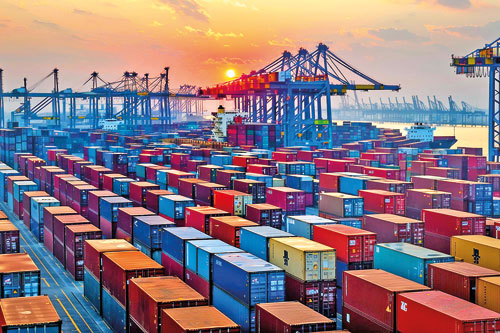
While the West Asian conflict is expected to settle sooner or later, issues will linger for longer as sea mines reportedly laid by Iran, similar to those used during the Iran-Iraq War, continue to endanger shipping routes, cargo handlers warn.
The Sunday Times learnt that global freight forwarding and logistics companies specialising in moving unaccompanied personal baggage (UPB) and cargo to Sri Lanka—including cargo from Sri Lankan migrant workers—are facing one of their most difficult operating environments in recent months, as the escalating conflict in West Asia continues to disrupt critical shipping routes.
Gamini Kannangara, managing director of Trico, one of the leading freight forwarding and logistics companies, explained: “We are now grappling with severe operational, financial, and safety challenges that are reshaping the entire logistics landscape. While the conflict itself is expected to settle within about one to one and a half months, the real crisis will persist far longer. The deployment of sea mines could take five to six months to fully clear, delaying the restoration of safe passage for commercial vessels.’’
Sea mines are difficult to detect and highly dangerous, as they can seriously damage ships. During the 1980s conflict, several ships were damaged after hitting mines. Because of this risk, shipping companies now consider large parts of the Gulf as high-risk or even unsafe to enter.
Mr Kannangara said the impact on Sri Lanka-bound shipments has been immediate and severe. Companies that once operated on predictable weekly schedules now face extended transit times and soaring costs. Routes that previously took five to six days to reach Sri Lanka are now taking up to two weeks. This doubling of transit time is not simply an inconvenience; it directly increases operating expenses, delays deliveries, and adds pressure on both businesses and consumers.
“Personal belongings that used to reach their destination in five to six days now take about two weeks. This is because shipments must be rerouted through safer windows, such as being trucked from Dubai to the Sohar port in Oman. Immediately after the war began, shipping services for migrant workers’ baggage were completely stopped for a time, though they have recently resumed with the first post-war shipments,” he said.
Mr Kannangara highlighted that these workers are also struggling with soaring food and beverage prices in West Asia. Since 95% of these goods are imported, shipping disruptions have led to shortages and price increases that “no one can stop’’.
War risk insurance for a container is about US$6,500, he said. For smaller logistics companies, this is too expensive, and many have had to stop operations. Shipment volumes have dropped by around 30% at larger companies, and they are taking serious steps to manage costs, he said.
Migrant workers sending personal baggage home to Sri Lanka, Indonesia, and the Philippines now face steep costs. They must pay war risk insurance surcharges of US$1,500 for a 20-foot container and US$3,000 for a 40-foot container.
Sohar has emerged as a crucial hub due to its location outside the high-risk “Upper Gulf” region. Unlike ports within the Strait of Hormuz, Sohar sits on the Indian Ocean side, which is considered relatively safer. This strategic positioning allows ships to bypass the most dangerous zones, including areas affected by naval tensions and sea mines.
They reroute shipments over long routes, including through the Suez Canal or even around the African continent in extreme cases. While these strategies ensure the continuity of trade, they come at a high price.
“However, reaching Sohar is not straightforward. Cargo that would typically be shipped directly from ports like Dubai must now be transported overland. Containers are trucked across borders into Oman before being loaded onto vessels. This land-sea transshipment process adds complexity, cost, and time to the supply chain. Additional border fees, handling charges, and logistical coordination are all contributing to the overall increase in shipping costs,” Mr Kannangara said.
Despite these challenges, Mr Kannangara said the company is downsizing, similar to the coronavirus epidemic period, to reduce costs. Two or three offices have been closed. He also warned that although staff have not been cut yet, if the 30% drop in volume continues for another five to six months, the company may have to reduce its workforce.
Sri Lanka’s logistics sector as a whole is feeling the pressure. In addition to Trico, players such as Hayleys Advantis, Expolanka Holdings, and Aitken Spence Logistics also handle freight forwarding, cargo, and supply chain management. While these larger firms have more resources to absorb shocks, they are not immune to disruptions.
For Sri Lanka, which depends heavily on sea trade, the situation is serious. Shipping disruptions badly affect both businesses and everyday people. Higher costs lead to increased prices for imported goods.
Logistics experts warn that even after the conflict ends, its adverse impact on global shipping and Sri Lanka’s logistics industry will be felt for many months.