Say Goodbye to the Panama Canal: A New Ocean-to-Ocean Route Just Shipped 900 Vehicles in Just 72 Hours
A single shipment of 900 vehicles crossed southern Mexico by rail in roughly nine hours this spring, moving from the Pacific to the U.S. East Coast in about 72 hours. The operation, run by Hyundai and its logistics arm Hyundai Glovis, marks the first major international test of Mexico’s Interoceanic Corridor of the Isthmus of Tehuantepec. This 303-kilometer rail route is taking shape just as climate pressures threaten the reliability of the Panama Canal.
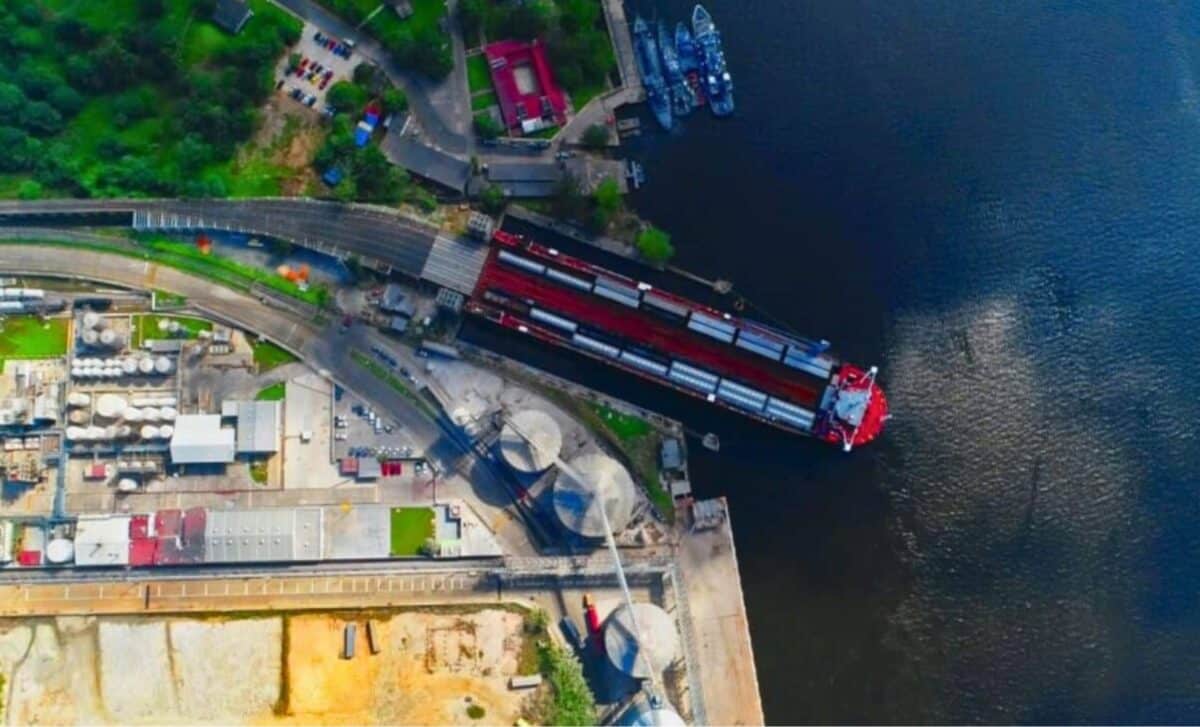
Vehicles traveled from South Korea to the Pacific port of Salina Cruz in Oaxaca. There, crews loaded them onto 50 BI-MAX freight wagons built for vehicle transport. The trains used Line Z of the corridor to reach Coatzacoalcos on the Gulf of Mexico, where the cargo transferred to a second ship for the final leg to Brunswick, Georgia. The full operation showed the corridor can handle multi-modal international freight at commercial scale.
The test arrived at a telling moment for global shipping. A 2025 study published in Geophysical Research Letters projected that the drought conditions that choked the Panama Canal in 2023 could strike twice as often by the end of the century if emissions remain high. Samuel Muñoz of Northeastern University led the research. His team modeled water levels in Gatún Lake, the freshwater source that feeds the canal’s locks, across several emissions pathways.
A Water Problem Decades in the Making
Every ship that moves through the Panama Canal depends on Gatún Lake. A single transit consumes more than 26 million gallons of freshwater. When drought hit in 2023, canal operators slashed daily crossings from 38 ships to as few as 22 and forced vessels to lighten their loads. Some cargo faced delays stretching past two weeks.
Muñoz’s model traced how Gatún Lake responds as temperatures climb and rain patterns shift. Under the highest-emissions scenario, the steepest losses came during Panama’s wet season. From May through August, monthly rainfall could drop by roughly 50 millimeters. Muñoz put the stakes plainly. “If we mitigate emissions and we choose one of the lower emissions pathways, then it really keeps this system pretty stable,” he said. “But if we don’t, then these low water levels that are really disruptive now become the norm by the end of the century.”
Canal authorities are already tightening water-use practices and planning a new reservoir. Still, the disruptions of 2023 and 2024 pushed shippers to look harder at routes that do not rise and fall with a single lake’s water level.
How Mexico’s Dry Canal Works
The Interoceanic Corridor is not one rail line. The Mexican Navy runs it as a multimodal logistics platform stitching together four ports: Salina Cruz, Coatzacoalcos, Dos Bocas, and Puerto Chiapas. The Mexican government detailed the platform’s structure during 2024 briefings with U.S. officials. Line Z, the 308-kilometer freight spine that Hyundai used, opened for service in December 2023.
The corridor requires two ocean transfers for cargo moving from Asia to the eastern United States. That double handling works for goods where speed and a reliable schedule matter more than the lowest possible freight cost. Finished vehicles fit the profile. Bulk container traffic does not, and the corridor is not designed to compete with Panama on that front.
Two additional rail lines are under development. Line FA, running from Coatzacoalcos toward Palenque, began service in September 2024. Line K stretches 447 kilometers toward the Guatemalan border and inaugurated its first section in November 2025. Mexico’s infrastructure project registry lists 14 planned industrial parks along the route, several already concessioned to private developers.
Nino Morales, President of the CIIT Oversight Commission, called the Hyundai run a meaningful proof point. “This test strengthens the Interoceanic Corridor as a strategic new route linking Asia with the U.S. East Coast,” he said.
A Supply Chain Shift Finds Its Moment
The corridor is opening just as supply chain geography bends toward Mexico. Nearshoring is pulling manufacturing investment into the country, and freight planners want routes that do not depend on a single narrow passage. Omar Cancino, a specialist in southern Mexican economics, said the CIIT “stands to become a crucial alternative for global trade, especially amid ongoing shifts in international supply chains and geopolitical uncertainty.”
U.S. officials heard a similar case in June 2024, when Mexico’s Secretary of Foreign Affairs and Secretary of the Navy presented the project in Washington. They framed the corridor as a platform capable of serving up to 10 percent of demand from the U.S. East and Midwest and pitched the tax incentives attached to its development zones.
Tensions Along the Tracks
Progress has not come without pushback. Indigenous communities in Oaxaca and Veracruz have challenged land use for the industrial parks, and courts have paused some construction. Environmental groups warn that new roads and energy infrastructure could cut into tropical forest cover that still blankets much of the region.
A sharper concern surfaced in December 2025, when a passenger train on the Interoceanic line derailed in Oaxaca and killed more than a dozen people. The crash triggered calls in Mexico’s Congress for inquiries into construction contracts and raised hard questions about safety oversight on a fast-moving, military-managed rail project.
The corridor is open for freight. It has delivered one clean proof of concept for vehicle logistics. What remains unproven is whether it can hit the 72-hour benchmark consistently and whether port capacity at both ends will keep pace. Full operational capacity is expected around mid-2026.