Pakistan PM meets Gulf, Iran envoys to discuss regional stability, economic ties
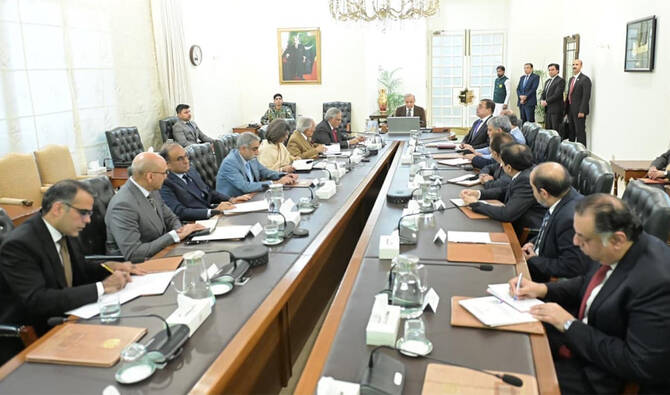
Pakistan Prime Minister Shehbaz Sharif on Monday met his country’s envoys to Gulf states and Iran to discuss regional stability and ways to deepen economic cooperation, the Pakistani information ministry said, as Islamabad pushes to sustain trade and investment inflows amid evolving geopolitical tensions in the Middle East.
Pakistan has been seeking stronger economic engagement with Gulf countries, particularly Saudi Arabia, the United Arab Emirates and Qatar, as it looks to attract foreign investment, expand energy cooperation and stabilize its economy under a $7 billion International Monetary Fund (IMF) program.
Islamabad also maintains close ties with neighboring Iran and has repeatedly stressed the importance of regional stability and diplomacy, amid an ongoing conflict between the United States (US) and Iran since Feb. 28 that has seen Tehran attack Gulf nations in response to US-Israeli strikes on Iran.
During their meeting with Sharif, Pakistan’s ambassadors to the Gulf Cooperation Council (GCC) countries and Iran briefed on the current state of Pakistan’s bilateral relations, emerging opportunities and challenges as well as issues relating to trade, investment, remittances and Pakistani diaspora.
“The Prime Minister emphasized the historic, economic and strategic importance of the GCC countries and Iran in Pakistan’s foreign policy,” the information ministry said in a statement. “He directed the Ambassadors to work proactively on enhancing bilateral cooperation in trade, investment, energy, people-to-people contacts etc.”
The meeting also included discussions on the regional and international situation, with particular focus on promoting peace, stability and economic cooperation in the broader region, according to the statement.
Pakistan, which has been leading diplomatic efforts to end the US-Iran conflict, has seen its economic recovery gain traction this fiscal year but it remains “highly exposed” to spillovers from the Middle East conflict, the IMF said last week, amid widespread disruptions of global cargo and energy supplies and threats to regional economies.
“As a net oil and gas importer, Pakistan is heavily reliant on GCC (Gulf Cooperation Council) supplies, with 81 percent of fuel imports coming from the region... In the event of sustained disruptions to the physical availability of fuel imports, impacts on economic activity would likely be even larger than implied by the increase in international prices,” it said in its report.
“Immediate exposures to fertilizer trade disruptions appear manageable, as Pakistan has been largely self-sufficient in urea production in recent years, but a prolonged disruption to DAP supply chains could potentially impact the Kharif planting season in June-July. Food import prices could also be impacted in the event of prolonged fertilizer trade disruptions.”
The lender said the impact of the war had clouded Pakistan’s near-term outlook and was expected to put upward pressure on inflation and weigh on growth and the balance of payments. The other risks faced by the country included a drop in worker remittances and capital outflows.