Sri Lanka’s fragile economic recovery is facing renewed pressure due to a sharply imbalanced trade relationship with China, raising concerns of a potential secondary balance-of-payments crisis.
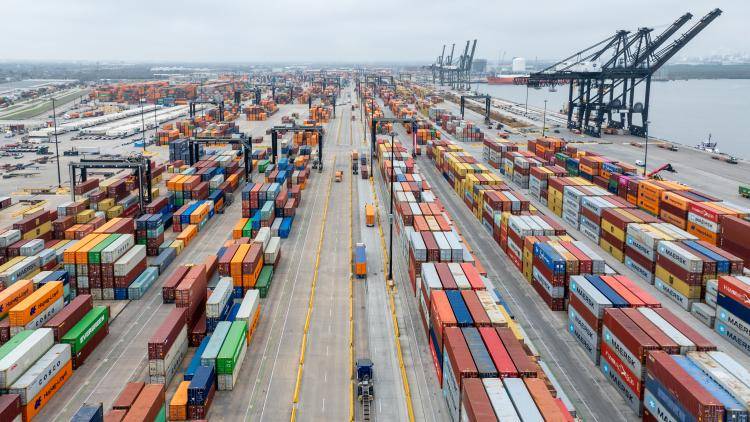
By 2025, China had emerged as Sri Lanka’s largest trading partner. However, the milestone has highlighted a widening trade deficit, with imports from China reaching $5.2 billion while exports remained limited to just $337 million. This has resulted in a significant trade gap of $4.9 billion, placing strain on the country’s foreign reserves at a time when it is still recovering from its sovereign debt crisis.
Economic analysts warn that the imbalance is effectively draining liquidity from the economy, creating what some describe as a “structural leak” that could undermine ongoing stabilization efforts.
A key factor contributing to this disparity is China’s extensive use of industrial subsidies, which allow its manufacturers to export goods at prices below actual production costs. According to the Center for Strategic and International Studies (CSIS), such subsidies are significantly higher than those of other major economies, giving Chinese exporters a decisive competitive advantage in global markets.
This dynamic has had a pronounced impact on Sri Lanka’s domestic industries, particularly in the automotive and electronics sectors. In February 2026 alone, imports from China surged by 107%, intensifying pressure on local manufacturers struggling to compete with low-cost, subsidised goods.
Industry observers caution that this trend is contributing to a “manufacturing vacuum,” where domestic production is gradually displaced, increasing reliance on Chinese supply chains.
Concerns have also been raised over the potential implications of a proposed China–Sri Lanka Free Trade Agreement (FTA). Economists affiliated with institutions such as the International Monetary Fund have warned that such agreements can disproportionately benefit larger economies through non-reciprocal trade advantages.
While an FTA could offer Sri Lanka zero-tariff access to Chinese markets in principle, experts note that non-tariff barriers—such as stringent sanitary and phytosanitary (SPS) standards and complex rules of origin—could continue to limit Sri Lankan exports, including high-grade tea and rubber.
At the same time, Sri Lanka may be required to remove tariffs on Chinese industrial imports, potentially reducing a key source of government revenue while further widening the trade deficit.
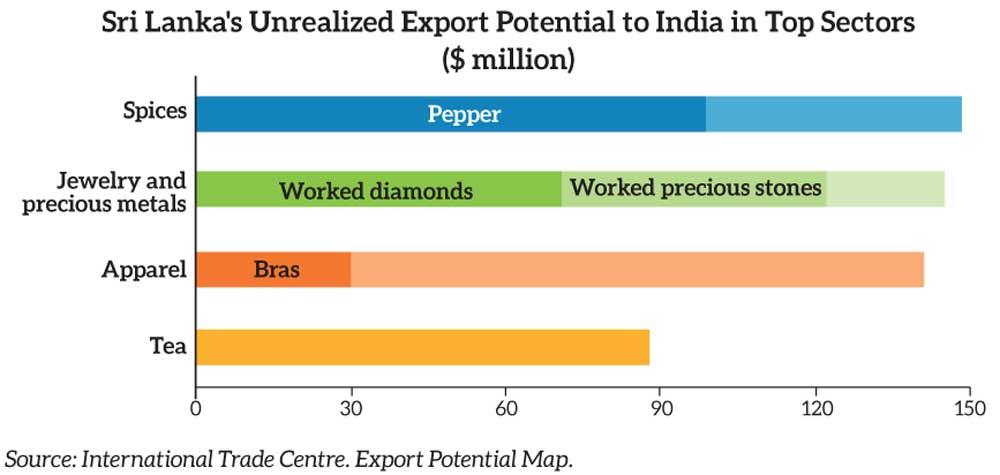
In response, economists are urging policymakers to adopt a strategy of trade diversification to reduce overreliance on a single market. Proposed measures include negotiating the removal of barriers affecting Sri Lankan apparel and value-added agricultural exports, strengthening trade ties with regional partners such as India and ASEAN member states, and implementing World Trade Organization-compliant anti-dumping measures to protect local industries.
Analysts emphasise that Sri Lanka’s long-term economic stability will depend on shifting toward value-added exports rather than continued dependence on subsidised imports.
Failure to address these structural imbalances, they warn, could trap the country in a cycle of “import-led debt,” where the costs of trade outweigh its benefits, posing risks to economic sovereignty and sustainable growth.