Australia should see Sri Lanka as more than a China–India contest
Hambantota is back in the news, but not as the old “China debt-trap” story.
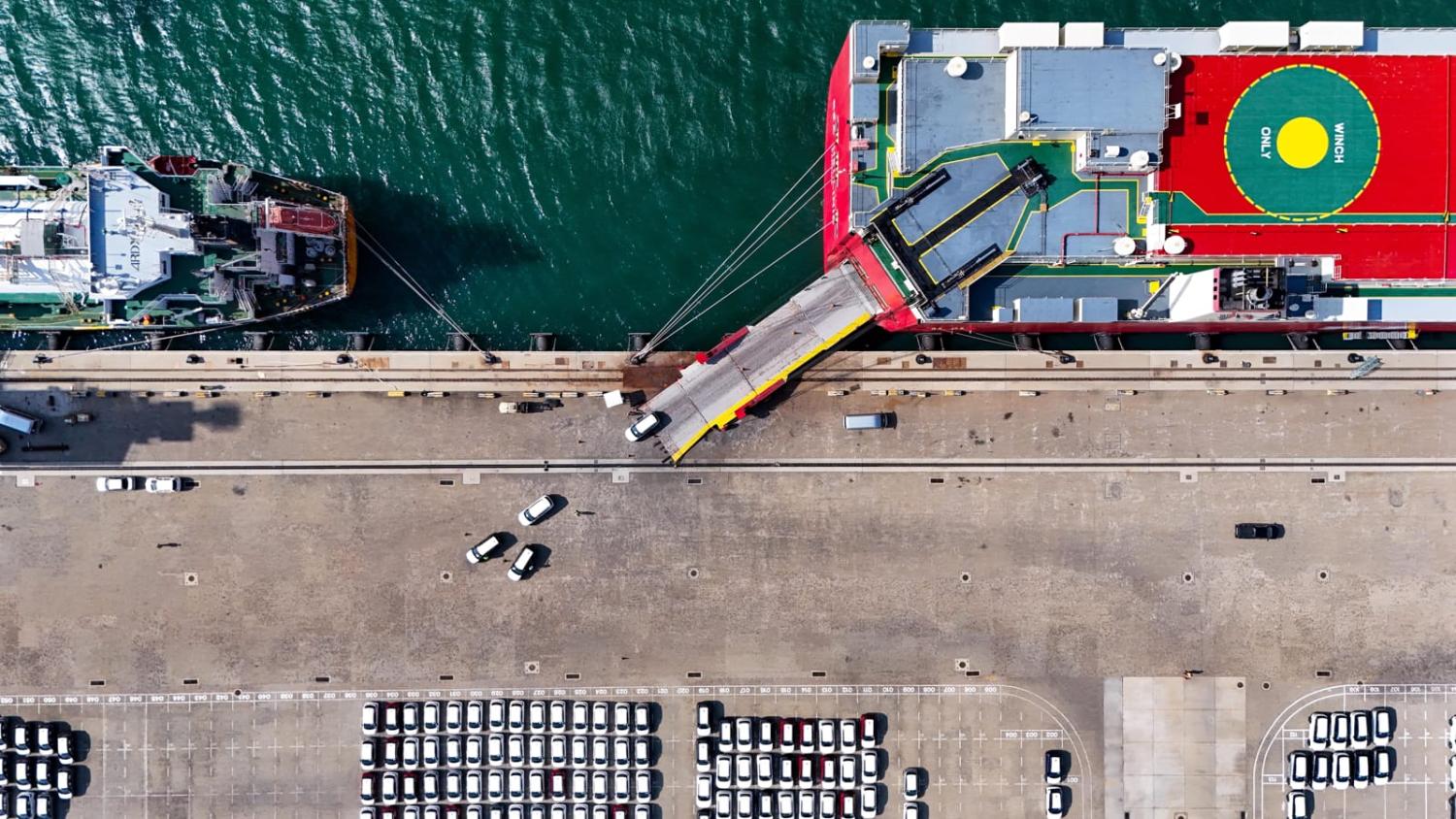
A decade ago, the port on Sri Lanka’s southern coast became shorthand for China’s expanding Indian Ocean reach, raising fears about debt, dual-use infrastructure and Beijing’s influence near India’s maritime backyard. Those concerns remain, but the story has moved on.
The latest attention around Hambantota matters because it points to a wider question about Sri Lanka’s post-crisis trajectory: whether the country can turn contested infrastructure, external partnerships and strategic geography into a more diversified recovery strategy. The proposed Sinopec refinery, tied to energy security, exports and the port’s commercial future, shows why Hambantota still matters – but only as one part of a much larger national transition.
Reducing this story to “China wins, Sri Lanka loses” misses the point. Sri Lanka today is not simply an object of great-power competition. It is trying to rebuild after default, restore investor confidence and reinsert itself into Indian Ocean commerce without surrendering strategic autonomy.
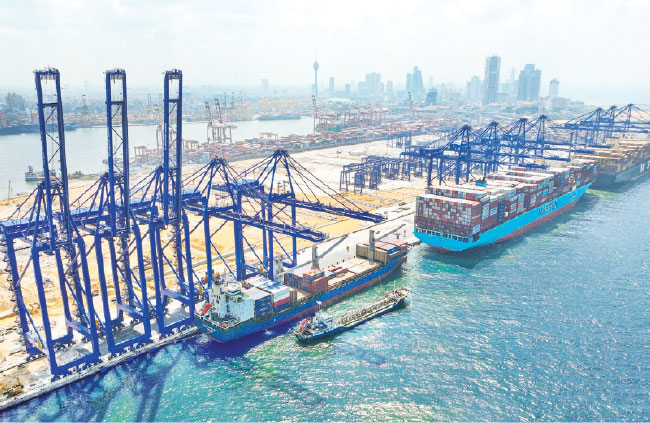
Sri Lanka is usually described through geography: near major sea lanes, close to India, attractive to China, and watched by the United States. That is true, but too narrow. The more important point is that Sri Lanka is becoming a regional test of sovereign capacity: whether a strategically located state can recover from economic collapse while retaining the institutional strength to bargain with all major powers without being absorbed by any one of them.
The sharper question is not whether China, India or the United States is “winning” Sri Lanka. It is whether Sri Lanka can manage debt, ports, maritime security, digital infrastructure, climate risk and anti-corruption reform on its own terms.
That should matter to Canberra – far more than seeing the country through a dated prism of asylum-seeker arrivals. It should also matter to Asia and the wider Indian Ocean, because Sri Lanka’s recovery will signal whether smaller states can rebuild autonomy amid debt pressure, infrastructure competition and great-power rivalry.
Australia’s relationship with Sri Lanka is deeper than public debate often suggests. The Department of Foreign Affairs and Trade describes ties as spanning trade, education, development, maritime security and cooperation against illegal migration, while Australia’s development partnership focuses on livelihoods, social cohesion, accountable institutions and maritime capability. Sri Lanka should therefore be seen not as a legacy border-protection file, but as an Indian Ocean governance partner at a time when regional order is being shaped through ports, energy corridors, digital systems and climate resilience.
Sri Lankan communities and students in Australia also create people-to-people ties that give Canberra a reservoir of trust many larger powers cannot easily reproduce.
Other actors are also moving quickly. China’s January 2025 joint statement with Sri Lanka reaffirmed Belt and Road cooperation around Hambantota, Colombo Port City, logistics, green development and the digital economy. India has expanded its role through crisis assistance, energy connectivity, defence cooperation and the Colombo Security Conclave. The proposed India–UAE development of Trincomalee as an energy hub also shows that Sri Lanka’s strategic value now extends beyond ports to fuel, pipelines and energy resilience.
The United States, Japan and the European Union remain active through governance support, creditor coordination, market access, fisheries and security cooperation.
The pattern is clear: influence now comes in packages. Debt, ports, energy, digital systems, market access, maritime surveillance and reform are increasingly bundled together.
That is why Australia’s comparative advantage matters. It does not need to outspend China, outrank India or duplicate the United States. Its strongest role is to help Sri Lanka become harder to coerce by investing in the institutions and public goods that expand its room for manoeuvre: public debt management, transparent procurement, anti-corruption capacity, fisheries enforcement, maritime domain awareness, climate adaptation, customs integrity, education links and digital governance. These are not soft add-ons. They are the infrastructure of sovereignty.
Sri Lanka’s economic recovery gives this argument urgency. The country is no longer in the same position it was at the height of the 2022 crisis. IMF-backed stabilisation and a change of political leadership. The direction is therefore not one of collapse, but of difficult recovery: stabilisation has begun, but its success depends on whether reforms become durable institutions.
That is where Australia can help in three practical ways.
First, Australia should strengthen Sri Lanka’s bargaining capacity, not merely offer technical assistance. Support for debt management, procurement transparency, audit capacity and anti-corruption institutions would help Colombo negotiate more confidently with all external financiers.
Second, Australia should expand maritime public goods – fisheries enforcement, hydrography, search and rescue, marine pollution response, coastal resilience and maritime data – as civilian sovereignty tools. Quad-linked maritime awareness can support this if used to strengthen Sri Lankan agency, not pull the country into bloc politics.
Third, Australia should use regional institutions more creatively. As fellow Indian Ocean Rim Association members, Sri Lanka and Australia already share a platform. Sri Lanka’s role in BIMSTEC, and the 2025 IORA–BIMSTEC memorandum, further links the Indian Ocean and Bay of Bengal. Australia should use these openings for legitimacy, capability and connectivity.
This is not an argument for making Sri Lanka choose sides. Sri Lanka’s value lies precisely in its potential to show how a smaller Indian Ocean state can diversify partnerships without surrendering autonomy.
The usual strategic question asks: who will control Sri Lanka’s ports? The better question is: can Sri Lanka build institutions strong enough to ensure that no external actor controls its choices?