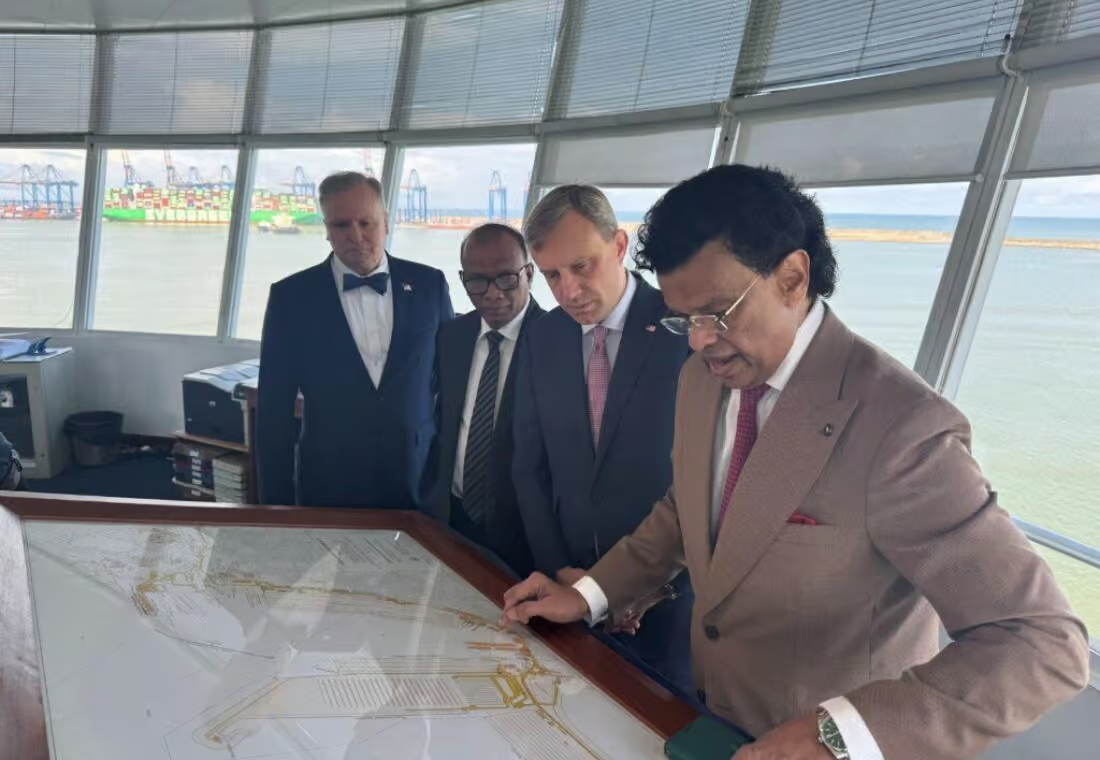
United States Bets $17 Million on Colombo Digital Overhaul as South Asian Transshipment Race Intensifies
The United States has committed $17 million to digitize operations at the Port of Colombo, one of South Asia’s busiest maritime gateways, in a move aimed at cutting shipping delays and reinforcing critical American supply chains through the Indian Ocean.
The announcement, made on October 16, 2026, at the Sri Lankan port, signals Washington’s growing strategic interest in modernizing trade infrastructure across key maritime corridors. The funding will support the Sri Lanka Ports Authority (SLPA) in developing two interconnected digital platforms designed to replace paper-based processes and fragmented communication systems that have long slowed cargo clearance.
Digital Systems to Replace Paper Processes
The project centers on establishing a Maritime Single Window and a Port Community System at Colombo, which handled more than half a million containers of U.S.-related cargo last year. These systems will enable shipping companies, customs officials, immigration authorities, port operators, and commercial entities to exchange information electronically rather than through manual documentation.
The Port of Colombo serves as a critical transshipment hub connecting South Asia with global markets, with an estimated $30 billion in U.S.-related cargo moving through the facility annually. Officials from both nations framed the investment as essential to maintaining the port’s competitiveness amid rising regional competition from other South Asian and Middle Eastern maritime centers.
“American trade depends on ports that are efficient, reliable, and ready to meet the demands of modern commerce,” said U.S. Ambassador to Sri Lanka Eric Meyer during the announcement ceremony. “When goods move faster and shipping costs come down, American companies are better positioned to compete and American consumers save money.”
Strategic and Commercial Stakes
The digitization initiative carries both economic and geopolitical weight. For Sri Lanka, modernizing port operations represents a critical step in sustaining Colombo’s position as a preferred transshipment point as neighboring countries invest heavily in their own maritime infrastructure. For the United States, the project advances efforts to secure supply chain resilience in strategically vital trade routes while creating export opportunities for American technology firms.
“Colombo’s future as a regional maritime hub depends not only on expanding physical infrastructure but also on modernizing how our ports operate,” said Anura Karunathilaka, Sri Lanka’s Minister of Ports and Civil Aviation. “This project will help Sri Lanka improve trade facilitation, attract business, and strengthen our connections to international markets.”
The SLPA will use an open, competitive process to select an implementing partner for the systems, creating opportunities for U.S. technology companies to provide hardware, software, and technical expertise. Officials indicated the procurement approach is designed to ensure transparency while maximizing the transfer of modern port management capabilities.
Operational Impact Expected
Industry analysts note that digitization at major transshipment hubs typically reduces vessel turnaround times by 20 to 30 percent while significantly lowering documentation-related delays. For carriers and forwarders operating in the region, improved predictability at Colombo could translate into more reliable schedule adherence and reduced demurrage exposure.
“These new digital systems will help us connect the many agencies and businesses involved in port operations, reduce unnecessary delays, and provide more predictable and efficient services to shipping lines and customers,” said Dr. Parakrama Dissanayake, Chairman of the Sri Lanka Ports Authority.
The project timeline has not been publicly detailed, though officials indicated implementation would proceed in phases. The initiative forms part of broader U.S. engagement in the Indo-Pacific region aimed at countering Chinese influence in critical maritime infrastructure while supporting allied nations’ economic development.