Sri Lanka among 60 countries subject to new U.S. import tax
Sri Lanka is among 60 countries included for a new import tax by the United States due to failure to enforce a prohibition on imports of goods produced with forced labour, the Office of the United States Trade Representative (USTR) said.
“USTR found that Sri Lanka has failed to impose and effectively enforce a forced labor import prohibition,” the Office of the USTR said in a report.
It said the investigations have found Sri Lanka’s failure to impose and effectively enforce a forced labor import prohibition is unreasonable as well as the failure to impose and effectively enforce a forced labor import prohibition burdens or restricts U.S. commerce.
“For the foregoing reasons, the results of this investigation indicate that the acts, policies and practices of Sri Lanka related to the failure to impose and effectively enforce a forced labor import prohibition are unreasonable and burden or restrict U.S. commerce.”
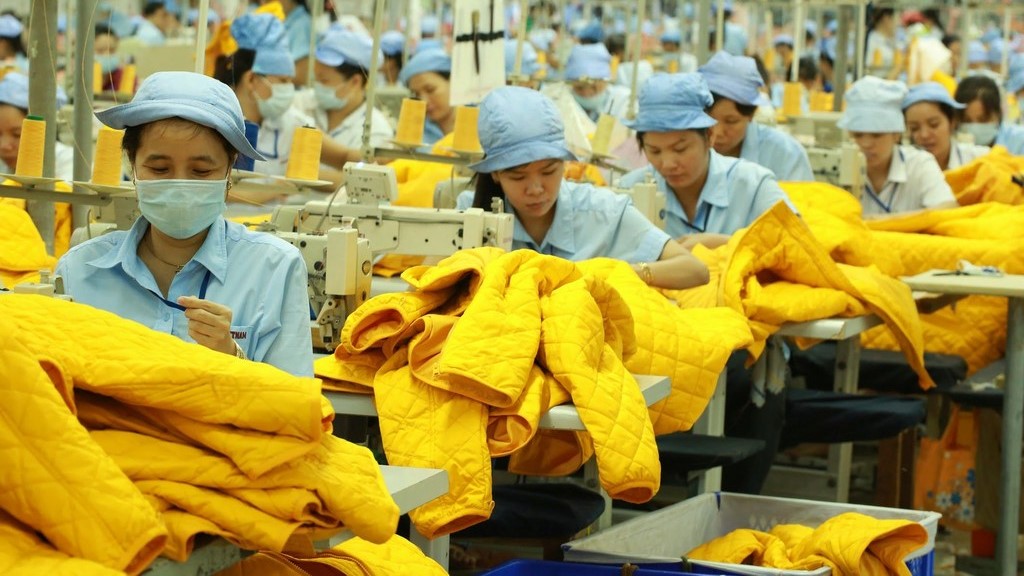
Analysts say the tax could be another burden to Sri Lankan exporters to the U.S. market, which is the island nation’s highest export destination. The U.S. accounted for around 22 percent of the total Sri Lankan exports led by the island nation’s top export goods: garments.
The new move comes after the United States Supreme Court in February 2026 invalidated a reciprocal tariff regime in which Sri Lanka had to pay a reduced 20 percent from the original 44 percent after negotiations.
The new import tax comes after the United States imposed a 10% ad valorem duty for 150 days on articles exported to the U.S. with indications that this could be adjusted under alternative legal provisions.
“The failure of our most important trading partners to address the importation of goods made with forced labor is unacceptable. This creates a dynamic where American workers are forced to compete globally on an unlevel playing field,” said USTR Ambassador Greer in a statement on Wednesday.
“We will no longer tolerate this disparity. Some trading partners have taken initial steps to prevent the importation of forced labor goods, including through USMCA (United States–Mexico–Canada Agreement) and commitments in Agreements on Reciprocal Trade. However, each of our trading partners must do more to ensure that trade does not perversely encourage and entrench forced labor globally.”
Sri Lanka Punished for Chinese Imports?
In its detailed report, the USTR said “in light of the primacy of the United States as a consumer of finished cotton and cotton mixed textiles and apparel, there is a significant risk that cotton subject to the UFLPA (Uyghur Forced Labor Prevention Act) is circumventing the United States’ forced labor import prohibition through imports from intermediary manufacturers in third economies”.
“This risk is documented in detailed case studies regarding intermediary manufacturers linked to China in economies subject to these investigations, namely, India; Indonesia; Jordan; Mexico; Pakistan; Sri Lanka; and Vietnam, as well as Ethiopia, Kenya.”
“These intermediary manufacturers serve to obfuscate the tracing of cotton exports subject to the UFLPA, and the deliberate opacity of many of these supply chains may lead international apparel brands, including some U.S. brands, to unwittingly import goods produced with inputs derived from forced labor.”
UFLPA is a U.S. federal law that establishes a rebuttable presumption that all goods, materials, or merchandise produced wholly or in part in China’s Xinjiang Uyghur Autonomous Region (XUAR) or by entities on the UFLPA Entity List are made with forced labor and are prohibited from entry into the United State.
The USTR has announced 10 percent duty for economies that impose a forced labor import prohibition and committed to impose and enforce such a prohibition through an Agreement on Reciprocal Trade, or economies that have imposed a partial regime with the effect of preventing the importation of certain forced labor goods.
For all other economies, the USTR has proposed an additional duty of 12.5 percent.
The USTR also has proposed a textile mechanism that would allow a certain volume of apparel and textile imports from certain economies to enter the United States at a reduced tariff rate. It was not immediatly clear if Sri Lanka is among those countries.
The Office of the USTR stated 54 economies that have failed to impose and effectively enforce a prohibition on the importation of goods produced with forced labor including Australia, Bangladesh, China, India, Japan, Malaysia, New Zealand, Norway, Russia, Saudi Arabia, Singapore, South Africa, South Korea, Switzerland, United Arab Emirates, and the United Kingdom.
It also said the Canada, Ecuador, the European Union, Indonesia, Mexico, and Pakistan have failed to effectively enforce a prohibition on the importation of goods produced with forced labor.